September 4, 2017

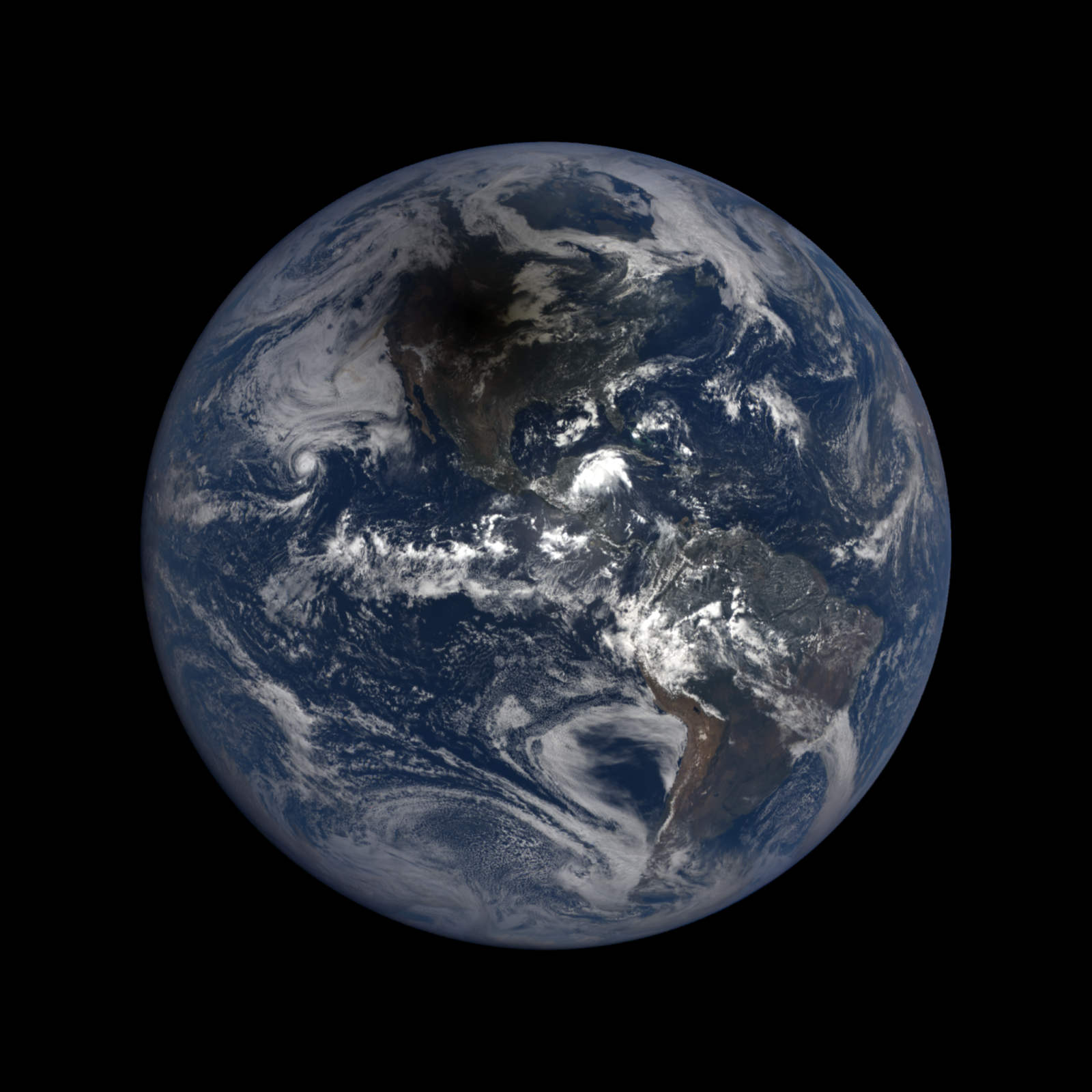
Solar Eclipse seen by DSCOVR Observatory

Solar Eclipse seen by DSCOVR ObservatorySolar Eclipse seen by DSCOVR ObservatorySolar Eclipse seen by DSCOVR ObservatorySolar Eclipse seen by DSCOVR ObservatorySolar Eclipse seen by DSCOVR ObservatorySolar Eclipse seen by DSCOVR ObservatorySolar Eclipse seen by DSCOVR ObservatorySolar Eclipse seen by DSCOVR ObservatorySolar Eclipse seen by DSCOVR ObservatorySolar Eclipse seen by DSCOVR ObservatorySolar Eclipse seen by DSCOVR Observatory

DSCOVR, 1 million miles from Earth
August 21, 2017

Image Credit: NASA EPIC Team

Spiral Galaxy NGC 5559

Spiral Galaxy NGC 5559

Like firecrackers lighting up the sky on New Year’s Eve, the majestic spiral arms of NGC 5559 are alight with new stars being born. NGC 5559 is a spiral galaxy, with spiral arms filled with gas and dust sweeping out around the bright galactic bulge. These arms are a rich environment for star formation, dotted with a festive array of colours including the newborn stars glowing blue as a result of their immensely high temperatures.

NGC 5559 was discovered by astronomer William Herschel in 1785 and lies approximately 240 million light-years away in the northern constellation of Boötes (the herdsman)

In 2001, a calcium-rich supernova called 2001co was observed in NGC 5559. Calcium-rich supernovae (Ca-rich SNe) are described as “fast-and-faint”, as they're less luminous than other types of supernovae and also evolve more rapidly, to reveal spectra dominated by strong calcium lines. 2001co occurred within the disc of NGC 5559 near star-forming regions, but Ca-rich SNe are often observed at large distances from the nearest galaxy, raising curious questions about their progenitors.

Image Credit: ESA/Hubble & NASA
Explanation from: https://www.spacetelescope.org/images/potw1736a/

Enceladus

Enceladus

The heavens often seem vast and unchanging as seen from Earth, but movement in the skies is the norm. The relative motions of both Cassini and Enceladus over a 15-minute period create the movement seen in this movie sequence.

Cassini has monitored Enceladus (313 miles or 504 kilometers across) with a particular interest in the plumes and the geology of the south polar region for many years. Different viewing geometries give scientists different information, and the resulting animation gives us a unique "spacecraft's eye" view of the flyby.

The movie is a composite of six images taken with the Cassini spacecraft narrow-angle camera on August 1, 2017 using filters that allow infrared, green, and ultraviolet light. The image filter centered on 930 nm (IR) was is red in this image, the image filter centered on the green is green, and the image filter centered on 338 nm (UV) is blue.

The view was obtained at a distance of approximately 112,000 miles (181,000 kilometers) from Enceladus. Image scale is about 0.6 mile (1 kilometer) per pixel.

Image Credit: NASA/JPL-Caltech/Space Science Institute
Explanation from: https://photojournal.jpl.nasa.gov/catalog/PIA21344